
QoderWake: Standardizing Agent Workflows for More Reliable Performance
Context
Context
What is QoderWake?

QoderWake is Alibaba Cloud’s platform for AI employees, called Wakers. Each has a defined role and uses company knowledge and tools to handle ongoing work. Teams can delegate tasks in chat and manage agents in one workspace.
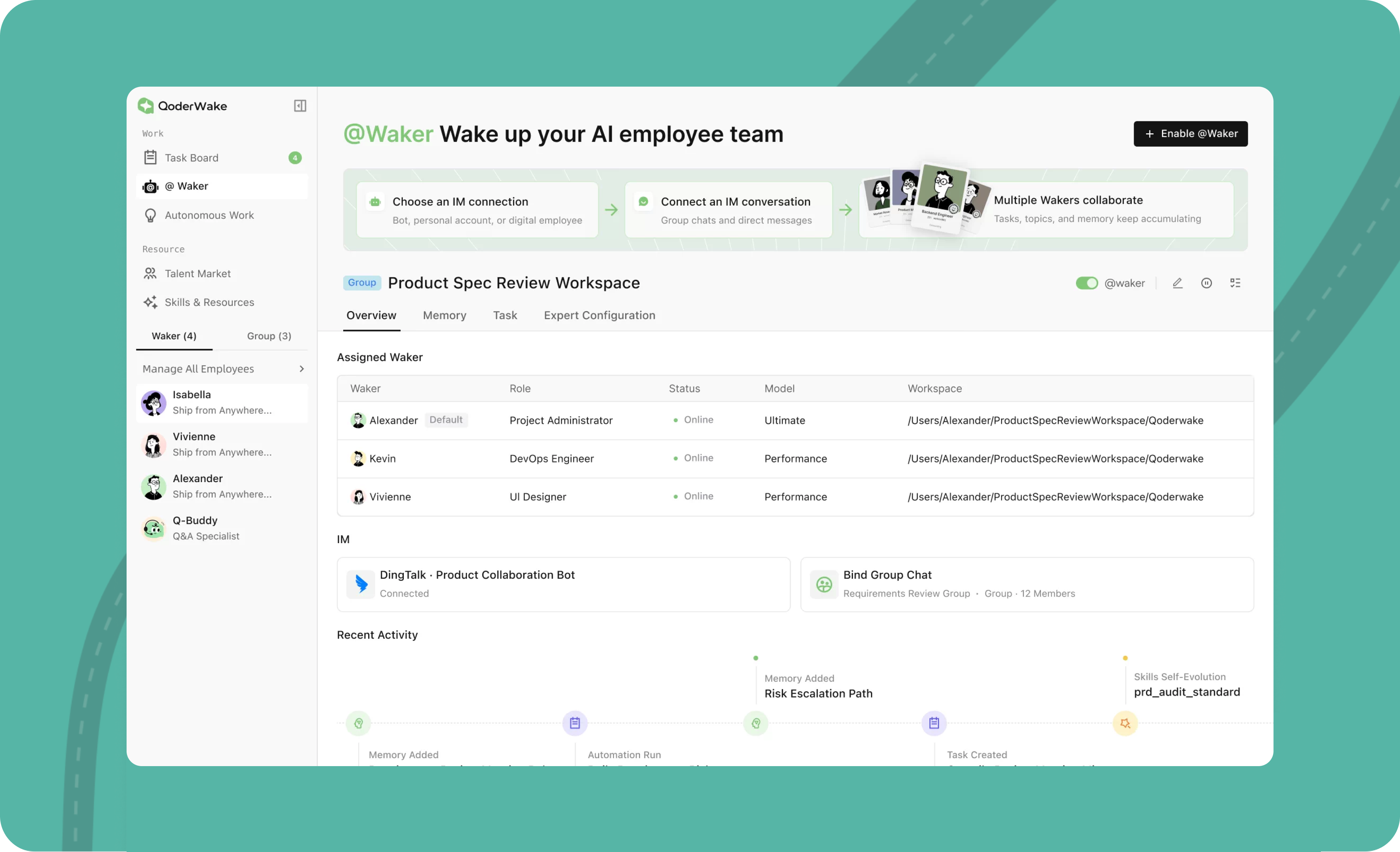
Manage Wakers in one shared workspace, assign roles, and connect resources. Track each agent’s tasks, status, and activity as work progresses.
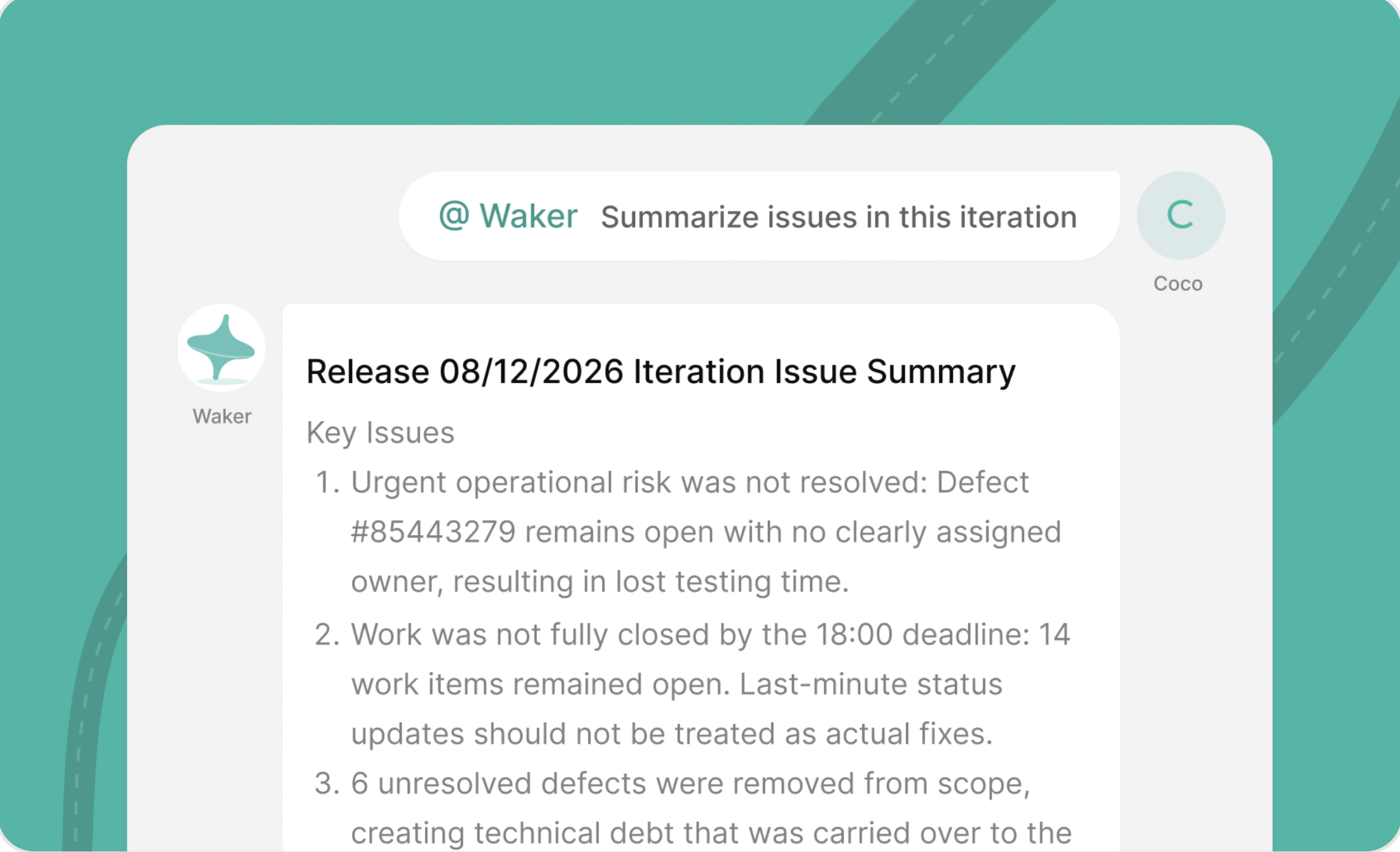
Mention @Waker in your team’s communication tools to collaborate with the full context of the conversation.
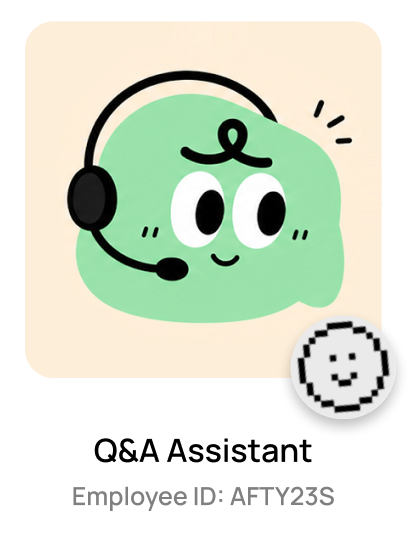
A new agent role: Q&A Assistant
Across Alibaba products and external clients, 10,000+ group chats need ongoing support. Clients such as XPeng field recurring customer questions whose answers already exist in a knowledge base, yet staff still monitor chats and reply manually.
I designed the Q&A Assistant to answer routine questions from that knowledge and route uncertain cases to a person.
My Challenge
Making group-chat support dependable
The assistant needs a reliable path from each question to a verified answer:
- Search the knowledge base using the question and chat context.
- Answer when the retrieved information is sufficient.
- Escalate unresolved questions to an expert.
- Save expert-confirmed answers for future questions.
Two connected design questions:
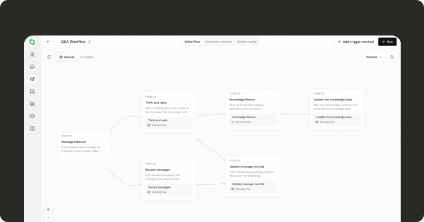
How might we stabilize agent behavior while keeping the flow flexible enough for different agents?
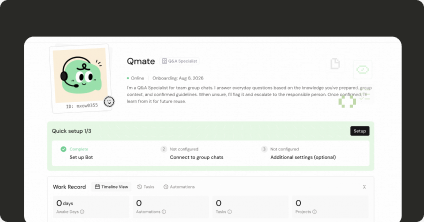
How might we help teams connect, configure, and confidently activate the assistant?
Final designs
Final designs
1. Dependable workflow
A Visible, Traceable Process
Every phase of the process remains visible—including its roles, responsibilities, inputs, outputs, and current status—so teams can understand what happened and backtrack through a run when something needs attention.
Highly Customizable Nodes
Allow customization for each node on language model and each prompt to ensure the best value and to save tokens effectively.
Natural Language Customization
Support natural language customization, and let users change behavior without editing workflow code or any advanced settings.
2. Setup
Guided Assistant Setup
A supporting setup experience connects the assistant to a messaging platform, group chat, knowledge, and experts so teams can put the workflow to use.
Impact
Impact
Three months of Q&A Assistant usage
Over three months, the Q&A Assistant reached more than 100,000 Alibaba employees and supported over 86,000 conversations. These results are specific to the assistant, not platform-wide QoderWake totals. It also became the most-created agent within five days of launch, with more than 1,000 creations.
- Users reached in three months
- 100,000+
- Conversations supported in 3 months
- 86,000+
- QA assistants created in the first five days
- 1,000+
- Successful response rate over 3 months
- 99.9%
The 99.9% successful response rate means the system replied without an error or failure to respond. It measures operational reliability, not whether the answer was correct.
More stable behavior, less troubleshooting
In practice, the flow I helped develop made agent behavior more stable, with fewer workflow problems, less troubleshooting, and fewer questions about unexpected behavior. This is a qualitative outcome; a before-and-after problem-rate reduction has not yet been quantified.
Reflections
Reflections
What I learned
Reliability is part of the interaction design
Developing Waker Flow taught me to design beyond the final answer. The stages, handoffs, and visibility of a run matter just as much as the conversational interface. A reusable flow needs enough structure to make behavior dependable and enough flexibility to serve different agent roles.
AI is making product roles more fluid
AI-assisted tools allowed me to move across product strategy, interaction design, prototyping, and frontend implementation, connecting product decisions more directly to the shipped experience.